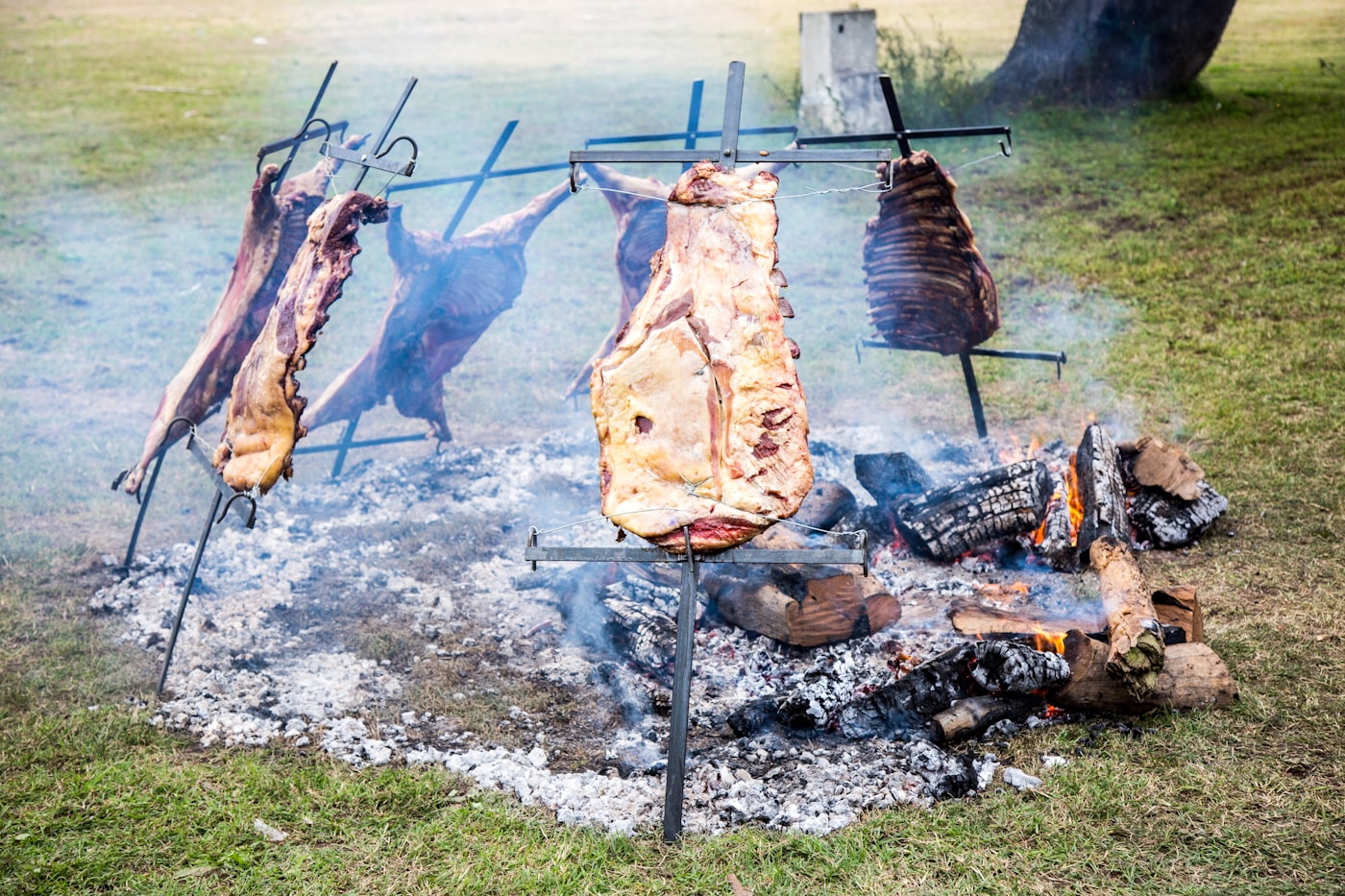
Whole cuts of beef roasting asador style, staked upright around an open wood fire

Uruguayan Kitchen, No Vegetable Oil

Uruguayan Cooking
Without Vegetable Oil

Slow fire, real butter and the unhurried recipes that have fed families along the Rio de la Plata for generations. No shortcuts, no seed oil, ever.

View the Recipes

The Rambla Cocina Way

Three Things We Never Compromise

Fuego Lento

Every dish begins with time and honest heat rather than a rushed stovetop. Wood, coal and patience do the work here, the same way an estancia asador has always worked.
Manteca de Estancia

Butter, beef fat and olive oil are the only fats that touch our pans, the same pantry Uruguayan grandmothers have trusted at every asado and every Sunday table.

Nunca Aceite Vegetal

Not a drop of soybean, canola or sunflower oil crosses this kitchen. If a fat did not come from a farm we recognize, it never goes anywhere near the pot.

Six Recipes From the Uruguayan Table

Recipes Worth Slowing Down For

From the coals of an asado to a slice of chaja for dessert, every recipe here is cooked in butter, beef fat or olive oil. Tap any card to open the full method.

Beef short ribs cooked low and slow over hardwood coals until the fat renders golden and the meat pulls easily from the bone, the way it is done at every Uruguayan estancia on a Sunday.

Ingredients

  • 3 lb (1.4 kg) beef short ribs, cut asado style across the bone
  • 2 tbsp coarse sea salt
  • 1 tbsp cracked black pepper
  • 4 tbsp butter, softened
  • 2 links Uruguayan style pork chorizo
  • 1 lb morcilla (blood sausage), optional
  • 4 crusty bread rolls
  • 2 lemons, halved
  • Fresh rosemary sprigs
  • Hardwood or quebracho charcoal

Method

  1. Light the charcoal in a chimney starter and let it burn until covered in white ash, then spread it evenly beneath the grate.
  2. Season the short ribs generously with salt and pepper on both sides, pressing it into the meat.
  3. Set the ribs bone side down over medium coals, positioned well above the fire, and let them render slowly for about 2 hours without turning often.
  4. Baste occasionally with softened butter using a rosemary sprig as a brush, keeping the fire low and steady.
  5. Add the chorizo and morcilla in the final 20 minutes, turning until the casings are golden and crisp.
  6. Move everything closer to the coals for the last 10 minutes to build a deep crust, watching that the butter does not scorch.
  7. Rest the meat for 10 minutes, then slice between the bones and serve with warm bread rolls and lemon.

A whole corvina straight from the Rio de la Plata, grilled until the skin blisters and finished with a spoon of herb butter, a coastal classic from Uruguay's parrillas.

Ingredients

  • 1 whole corvina or sea bass (about 2 lb), cleaned and scaled
  • 4 tbsp butter, softened
  • 2 cloves garlic, minced
  • 1 tbsp fresh parsley, chopped
  • 1 tbsp fresh oregano, chopped
  • 1 lemon, half juiced and half sliced
  • 1 tsp coarse sea salt
  • 1/2 tsp black pepper
  • 1 small red onion, thinly sliced
  • 2 tbsp olive oil

Method

  1. Pat the fish completely dry and score the skin with three shallow diagonal cuts on each side.
  2. Rub the fish inside and out with olive oil, salt and pepper, then tuck the lemon slices and onion into the cavity.
  3. Mix the softened butter with garlic, parsley and oregano and set aside at room temperature.
  4. Grill over medium coals for about 8 minutes per side, turning once the skin releases easily from the grate.
  5. Check doneness by flaking the thickest part near the spine, it should be opaque and firm.
  6. Transfer to a platter and top immediately with spoonfuls of herb butter so it melts over the hot fish.
  7. Finish with a squeeze of lemon juice and serve right away.

Wedges of zapallo criollo roasted until caramelized at the edges, a humble side that shows up at nearly every Uruguayan table alongside the asado.

Ingredients

  • 2 lb zapallo criollo or kabocha squash, cut into wedges
  • 4 tbsp butter, melted
  • 3 sprigs fresh thyme
  • 2 cloves garlic, thinly sliced
  • 1 tsp coarse sea salt
  • 1/2 tsp black pepper
  • 1/4 tsp ground cinnamon
  • 1 tbsp brown sugar
  • 1 tbsp sherry vinegar
  • Flaky salt for serving

Method

  1. Preheat the oven to 400°F (200°C) and line a heavy baking sheet with parchment.
  2. Arrange the squash wedges in a single layer, skin side down, without crowding the pan.
  3. Whisk the melted butter with cinnamon, brown sugar and half the thyme leaves, then brush over the wedges.
  4. Scatter the garlic slices and remaining thyme sprigs over the top and season with salt and pepper.
  5. Roast for 35 to 40 minutes, basting once halfway through, until the edges are deeply caramelized.
  6. Drizzle the sherry vinegar over the squash in the last five minutes of roasting.
  7. Finish with a pinch of flaky salt before serving warm.

A slow simmered pot of beef, chorizo and root vegetables that has warmed Uruguayan kitchens through the coldest months for generations.

Ingredients

  • 2 lb beef shank or brisket, cut into large chunks
  • 1/2 lb pork ribs
  • 2 chorizo sausages
  • 3 carrots, peeled and halved
  • 2 potatoes, peeled and quartered
  • 1 small zapallo (pumpkin), cut into chunks
  • 1 leek, cleaned and sliced
  • 1 small green cabbage, quartered
  • 2 ears corn, halved
  • 2 bay leaves

Method

  1. Place the beef and pork ribs in a large pot, cover generously with cold water and bring to a slow simmer.
  2. Skim the foam that rises during the first 20 minutes, then add the bay leaves.
  3. Cover partially and simmer gently for about 1 hour 30 minutes, until the meat begins to soften.
  4. Add the chorizo, carrots and leek, and continue simmering for another 30 minutes.
  5. Add the potatoes, pumpkin and corn, and simmer until the vegetables are tender but not falling apart.
  6. Add the cabbage in the final 15 minutes so it stays slightly firm.
  7. Season the broth with salt to taste and serve the meat, vegetables and broth together in deep bowls.

A dense, golden country loaf baked in butter rather than oil, the kind that shows up warm on the table at every Uruguayan Sunday lunch.

Ingredients

  • 4 cups (500g) all purpose flour
  • 1 packet (7g) active dry yeast
  • 1 1/4 cups warm milk
  • 3 tbsp butter, melted, plus extra for the pan
  • 1 tbsp sugar
  • 1 1/2 tsp salt
  • 1 egg
  • 1 egg yolk, for brushing
  • 1 tbsp warm water
  • Extra flour for kneading

Method

  1. Dissolve the yeast and sugar in the warm milk and let it sit for 10 minutes until foamy.
  2. In a large bowl, combine the flour and salt, then make a well in the center.
  3. Pour in the yeast mixture, melted butter and egg, and mix until a shaggy dough forms.
  4. Knead on a floured surface for about 10 minutes until smooth and elastic.
  5. Place the dough in a buttered bowl, cover and let it rise in a warm spot for about 1 hour, until doubled.
  6. Shape into a round loaf, place in a buttered pan, cover and let rise again for 30 minutes.
  7. Brush with the egg yolk mixed with warm water and bake at 375°F (190°C) for 30 to 35 minutes, until deeply golden and hollow sounding when tapped.

Uruguay's most celebrated dessert, layers of sponge cake, whipped cream, dulce de leche, peaches and shattered meringue, first created in the city of Paysandu.

Ingredients

  • 1 sponge cake, sliced into thin layers
  • 2 cups heavy cream, chilled
  • 3 tbsp powdered sugar
  • 1 cup dulce de leche, softened
  • 4 ripe peaches, sliced (or 2 cups canned peaches, drained)
  • 6 meringue shells or cookies, crushed into shards
  • 1/4 cup peach syrup or juice
  • 1 tsp vanilla extract
  • Pinch of salt
  • Extra crushed meringue for topping

Method

  1. Whip the chilled cream with powdered sugar, vanilla and a pinch of salt until soft peaks form.
  2. Warm the dulce de leche slightly so it spreads easily, and set both aside.
  3. Line the base of a deep glass dish with a layer of sponge cake, brushed lightly with peach syrup.
  4. Spread a thin layer of dulce de leche over the sponge, followed by whipped cream and a scatter of crushed meringue.
  5. Arrange sliced peaches over the cream, then repeat the layers of sponge, dulce de leche, cream and meringue.
  6. Finish with a generous final layer of whipped cream, covering the top completely, then scatter crushed meringue over it.
  7. Chill for at least 3 hours before serving so the layers set and the sponge softens slightly.

Our Kitchen

Cooked the Way Uruguay Has Always Cooked

Rambla Cocina began as a small collection of family recipes gathered from kitchens along the coast of Uruguay, the kind of cooking that depends on patience, real butter and a slow fire rather than processed vegetable oil. We publish these recipes exactly as they are cooked at home, an asado turned by hand over coals, pumpkin roasted until the edges caramelize, a loaf of bread proofed until it doubles on its own time.

Every recipe on this site avoids seed oils entirely. We cook the way Uruguayan households have cooked for generations, with butter, beef fat, olive oil and patience, and we write each recipe so that anyone, anywhere, can bring a little of that tradition into their own kitchen.

No shortcuts. No vegetable oil. Just the recipes.